STC’s ‘The Score’ — When Genius Meets Power
For Washington audiences who like their theatre with a little art, argument, ambition, and authoritarianism, The Score, now onstage at Shakespeare Theatre Company, offers a timely reminder that the struggle between creative freedom and political power is hardly confined to the 18th century.
Yes, the initial ticket temptation is obvious: Brian Cox. The Golden Globe winner and Succession star brings his considerable star power to Johann Sebastian Bach, while legendary director Trevor Nunn, whose résumé includes Les Misérables and Cats, takes the reins. That’s enough marquee wattage to fill a theatre.
But the real draw is the story.
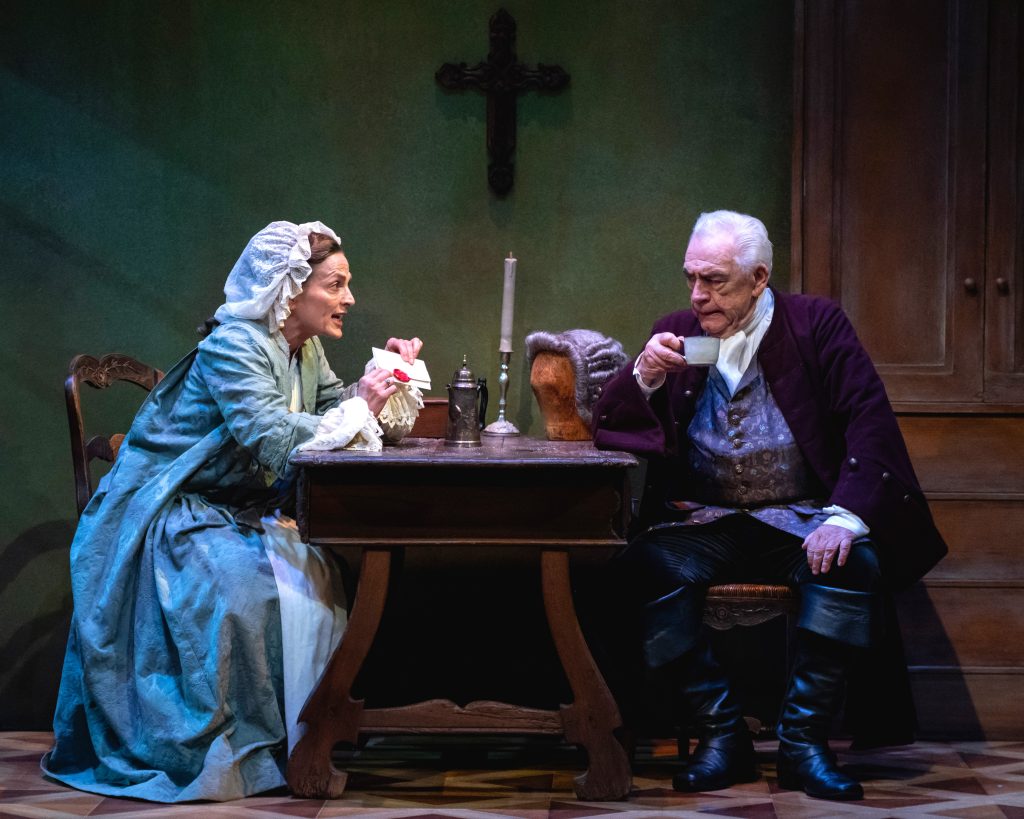
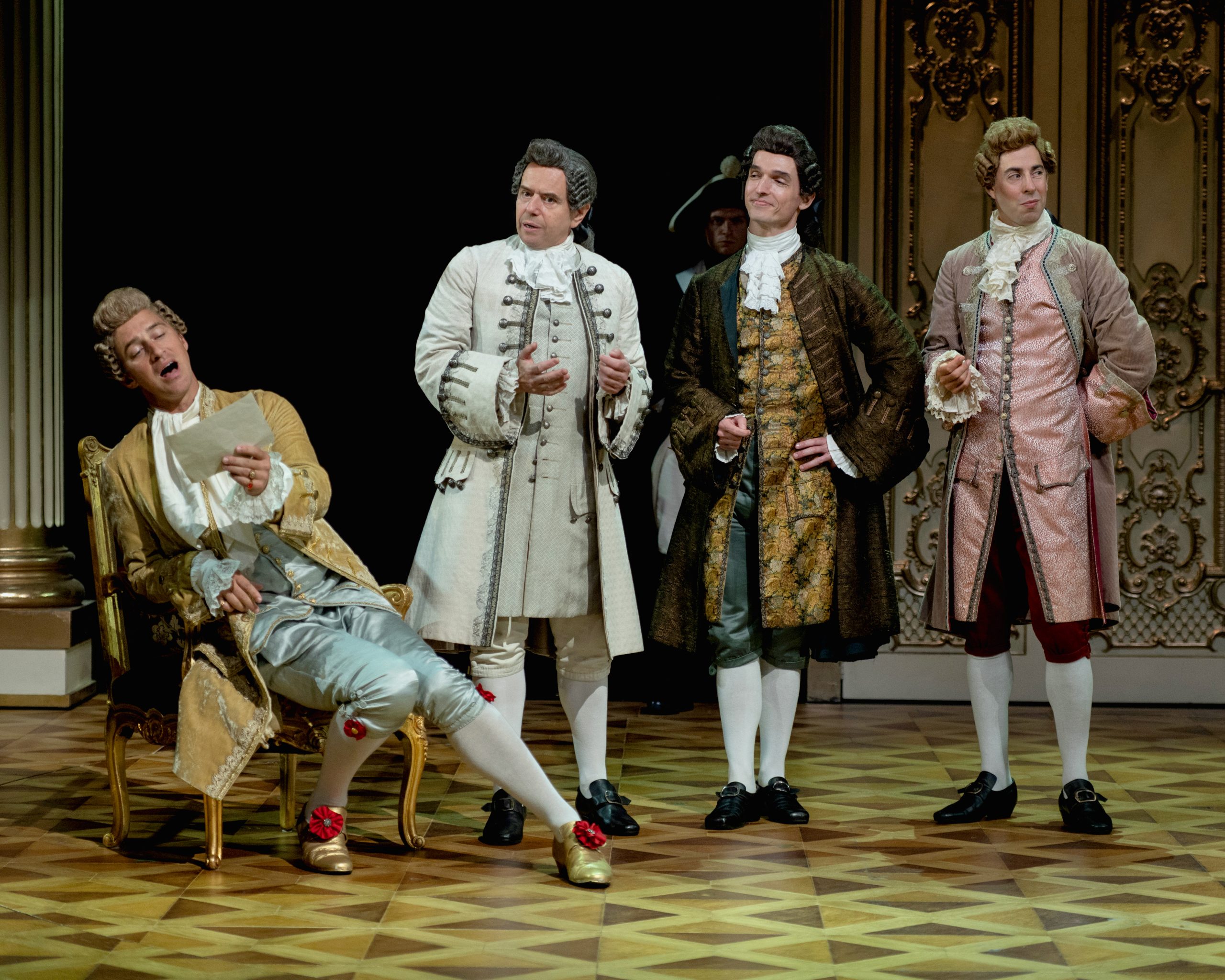
Set in 1747, Oliver Cotton’s drama revisits Bach’s actual encounter with Frederick II of Prussia. Bach, aging, devout, and fiercely protective of his artistic integrity, reluctantly travels to the king’s court. Frederick, meanwhile, is a ruler with musical ambitions, an appetite for power (and an ego some find dangerous).
When the king presents Bach with a fiendishly difficult musical puzzle, the evening becomes something much larger than a test of technique.
That contest — art versus authority, creativity versus control, principle versus patronage — is where The Score finds its spark. Bach needs to navigate a court where artistic talent exists at the pleasure of the powerful, while Frederick wants to be both monarch and maestro. The historical meeting ultimately inspired Bach’s Musical Offering, giving the play a fascinating real-world foundation.
Cox, unsurprisingly, is a commanding presence. He plays Bach not as a saintly musical monument but as a prickly, passionate, aging man: proud, funny, irascible, vulnerable, and absolutely convinced that his music serves something greater than himself. His ability to move from thunderous indignation to tenderness gives the character welcome dimension.
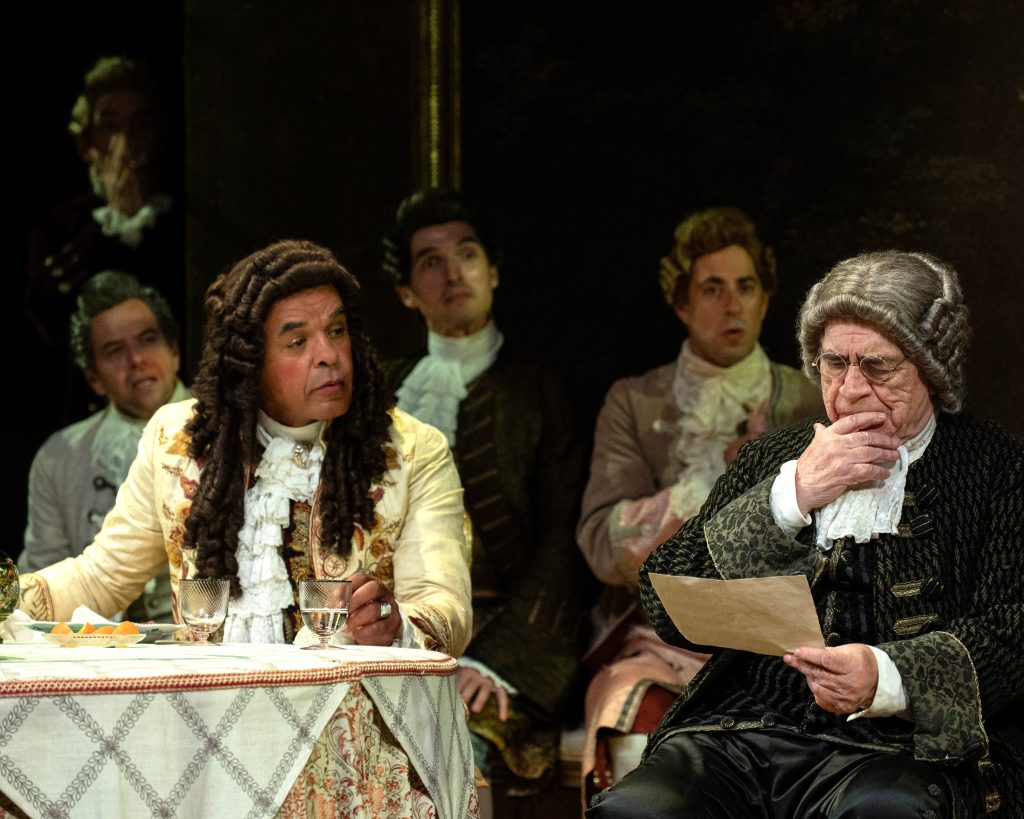
Opposite him, Frederick (Stephen Hagan) becomes more than a mustache-twirling monarch. The king is cultured, clever, ambitious… and capable of justifying brutal political choices in the language of progress. That makes the central confrontation considerably more interesting than a simple good-genius-versus-bad-king showdown.
And that’s where Washington audiences seem to want to find the play especially resonant.
The Score is, at heart, a history lesson wrapped in a power struggle wrapped in a musical puzzle. History buffs will appreciate the real figures and events. Art lovers will enjoy the questions about artistic independence and patronage. And political junkies will recognize the oldest story in the capital: What happens when talent depends on the favor of power?
Nunn’s production gives the proceedings an appropriately grand, period-piece polish, with Robert Jones’ sumptuous design helping transport the audience from Bach’s Leipzig home to Frederick’s court. The result is visually rich without overwhelming the human drama.
So, the star power may sell the first tickets. The history holds the attention. The ideas linger after the curtain.
The Score has an extended staging through October 25 at Shakespeare Theatre Company. Runtime is approximately two and a half hours, including a 20-minute intermission.