
Woolly Mammoth Audiences Imagine the End in “The World to Come”
Woolly Mammoth Theatre Company has raised the curtain on The World to Come, a new epic by Ali Viterbi. Co-produced with Theater J and directed by Woolly co-founder and Artistic Director Emeritus Howard Shalwitz, the production runs through March 1, arriving as both premiere and homecoming.
Shalwitz’s return lands during a leadership transition at the theatre he helped build more than four decades ago. That duality, memory meeting momentum, echoes through Viterbi’s script, which situates its story in a retirement home as the outside world edges toward apocalypse.
Inside, residents spar over Scrabble scores, savor late-in-life flirtations, and trade strange prophecies while armored nurses patrol the premises. Outside, the world wobbles toward collapse. The juxtaposition is comic and chilling in equal measure.

The choice to center older Americans (often sidelined on stage) proves quietly radical. These characters are not sentimental symbols but stubborn, sharp-tongued survivors. Their friendships function as both balm and bulwark. In Viterbi’s hands, joy becomes defiance, and community becomes a kind of civic shield.
The script suggests that when institutions falter, it is the intimate rituals: word games, whispered confidences, shared meals, that steady the soul.
And, of course, the apocalypse may be less literal than psychological.
One possible interpretation is that the looming disaster is a manifestation of cultural anxiety, doubt, and the steady drip of destabilizing headlines. In that reading, the retirement home becomes a microcosm of the nation: fractured, fearful, yet fiercely attached to routine. The residents’ word games and whispered confidences function as rituals of resistance, small but stubborn assertions of agency in a world that seems to be slipping its seams.
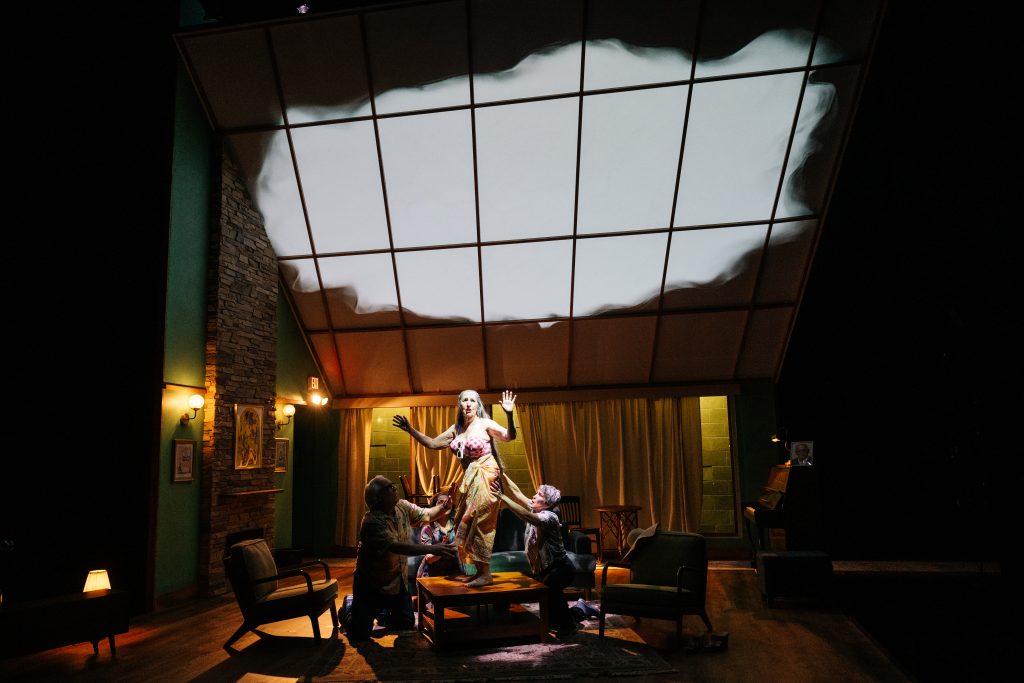
Or perhaps the play is an inquiry into aging itself. The “end of the world” parallels the end-of-life horizon that shadows the characters. By merging personal mortality with societal collapse, Viterbi blurs the boundary between private and public peril. Friendship, here, is not sentimental but strategic.
Through all of the shenanigans, Shalwitz directs by allowing absurdity and anxiety to coexist. He leans into the humor without undercutting the hazard, but the pacing occasionally meanders.
Overall, if the apocalypse looms, The World to Come insists on laughter anyway. It asks what we protect when systems fail, what we salvage when certainty slips, and who we cling to when the sirens sound. And it is on stage for audiences to enjoy through March 1, 2026.