Inside RIAA/National Archives Foundation’s Garth-Fueled Gathering
Country music’s biggest hitmaker brought heart, history, and a healthy dose of honky-tonk to the nation’s capital as the Recording Industry Association of America (RIAA) partnered with the National Archives Foundation for An Evening with Garth Brooks.
Serving as the spirited kickoff to Washington’s three-day Spirit of Independence Festival, the celebration honored 250 years of American music while spotlighting the enduring soundtrack of the nation’s story.
The evening opened with a rousing performance from The Washington Tattoo, whose retired military musicians delivered crowd-pleasing classics.

National Archives Foundation CEO Patrick Madden and RIAA Chairman and CEO Mitch Glazier welcomed attendees, reflecting on the cultural force of American music before introducing a performer whose influence has defined country music for decades.
Then came a surprise for Garth Brooks. RIAA President and COO Michele Ballantyne and Chief Policy Officer Morna Willens presented Brooks with an enormous plaque commemorating yet another record-breaking achievement: 200 million Gold and Platinum-certified albums.
Recently named RIAA’s Artist of a Lifetime, Brooks remains the only artist ever to earn 10 Diamond album certifications, with blockbuster releases including No Fences, Ropin’ the Wind, The Hits, and Double Live continuing to resonate with fans across generations.
Accepting the honor to thunderous applause, Brooks credited his devoted fans, country radio, and the countless supporters who helped fuel a career unlike any other.
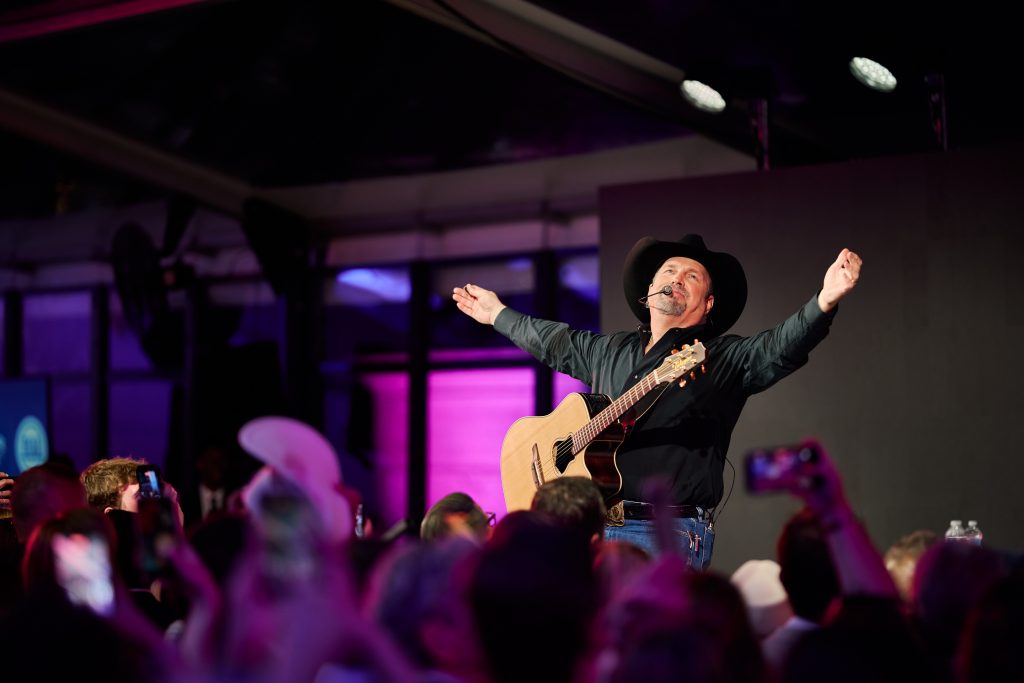
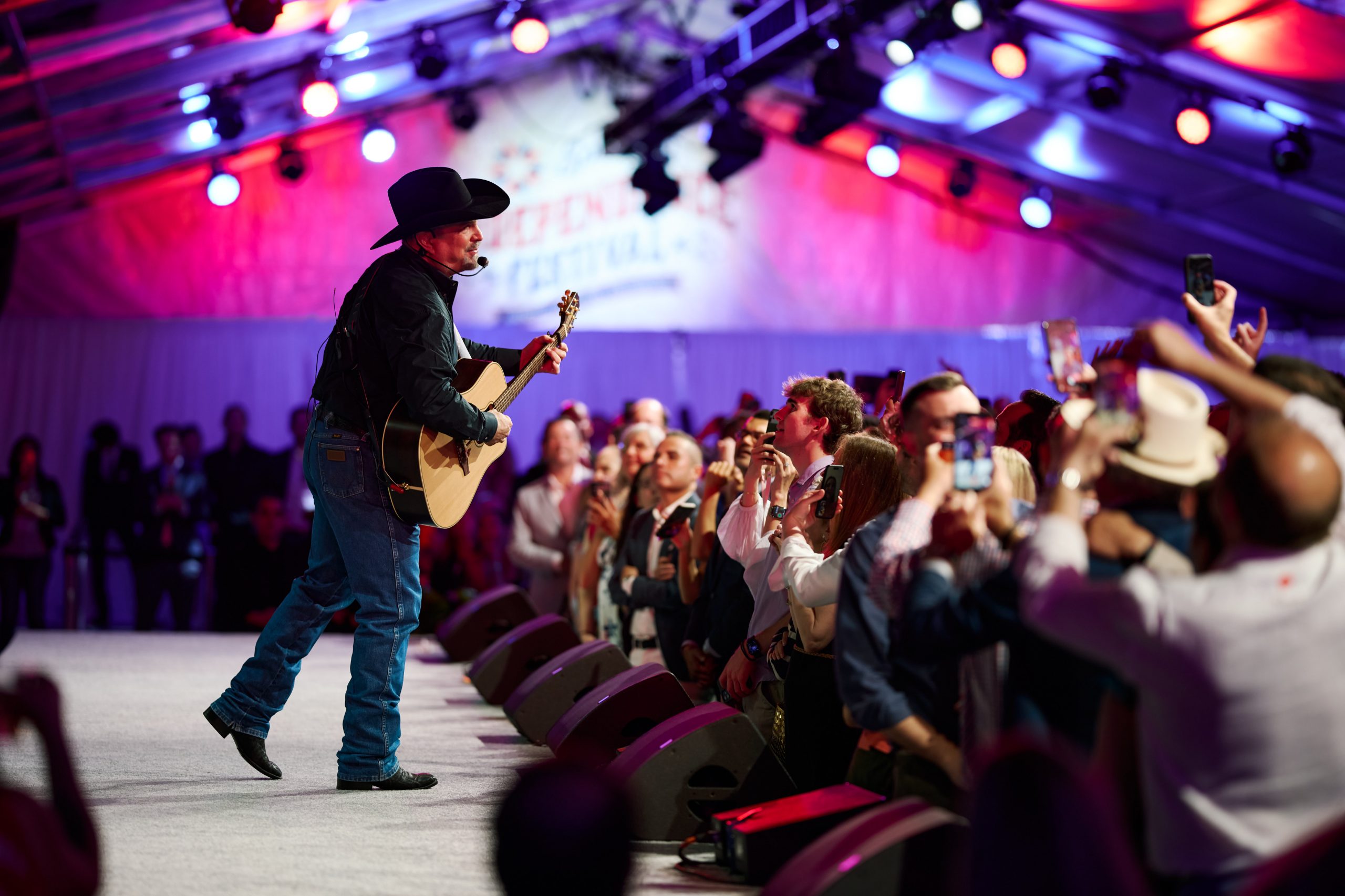
Armed with little more than an acoustic guitar, a catalog of classics, and undeniable charisma, Brooks transformed the evening from an industry gathering to a sing-along celebration. Tracing the lineage of country music through legends including Elvis Presley, Merle Haggard, George Jones, Bill Withers, and Otis Redding, while acknowledging influences like James Taylor, Bob Seger, and George Strait, Brooks delivered both a history lesson and a heartfelt tribute to American music.
But it was his own songs that turned spectators into participants, with the crowd becoming a chorus, belting out familiar lyrics and transforming the National Archives lawn into an unlikely honky-tonk revival.